Is evaluating Parkrun a huge waste of time and money?
Last month, there were loads of articles in papers and online, angry that that the Labour Government had chosen to commit £160,000 to evaluate the impact of Parkrun.
It’s obviously common sense that Parkrun is good for your health. You run (or walk), you move your body, your heart rate goes up, you get healthier.
So, spending money evaluating it is a waste of taxpayers money, right?
Even the Daily Mail thinks so.
….what a load of nonsense.
[edit: the spend was to evaluate the use of parkrun for social prescribing specifically. So even the way it has been framed in some media outlets is nonsense]
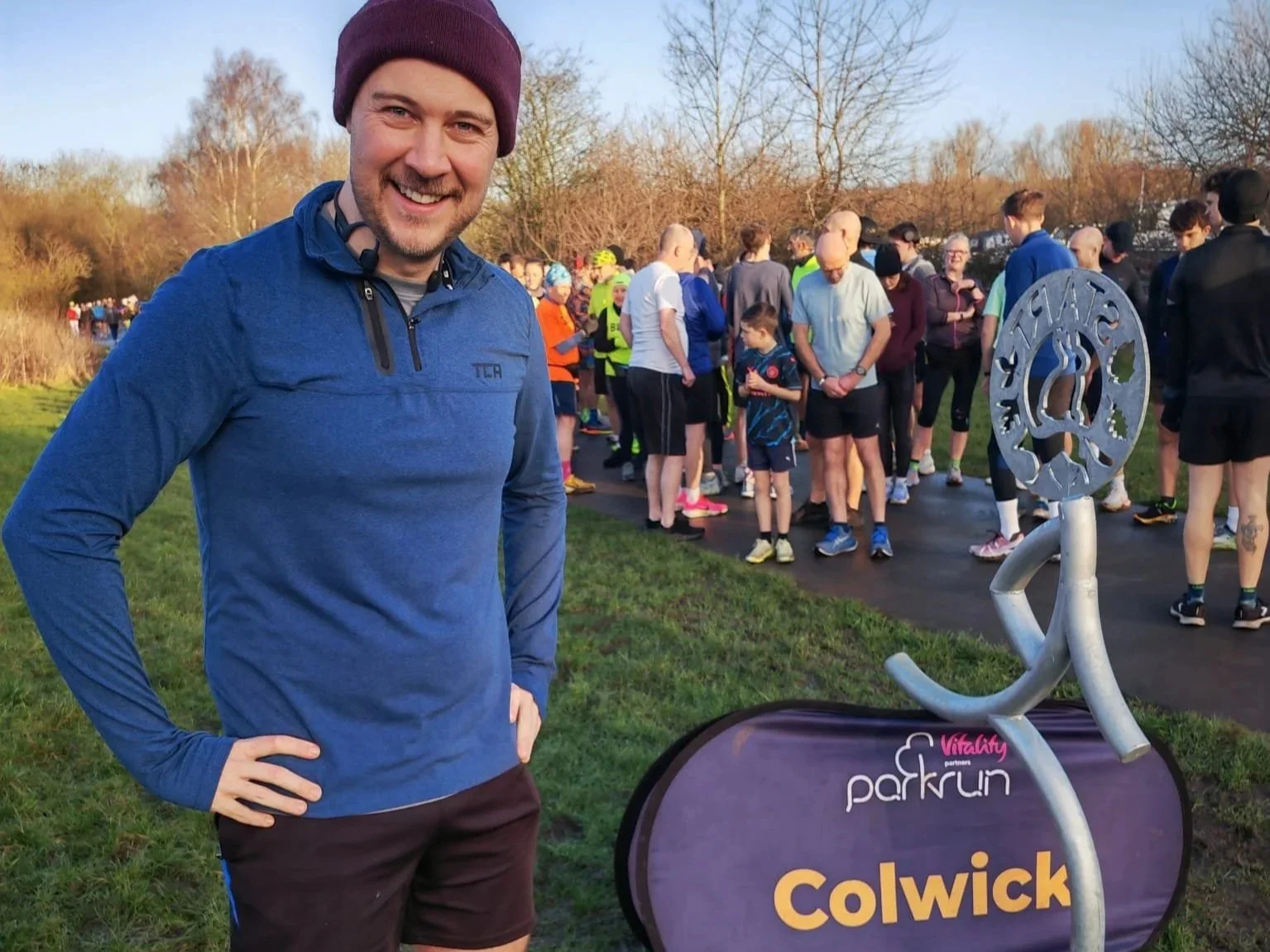
Cards on the table: not only do I work in research and evaluation, I also head to Colwick Country Park most Saturday mornings to do the Parkrun. So I have a bias. But hear me out.
Getting into running Parkrun, I’m increasingly convinced that the most important impacts of Parkrun are not the obvious ones, and that’s exactly why evaluation matters.
Over the last year, doing Parkrun has impacted my life in ways I didn’t anticipate and wouldn’t have been able to articulate beforehand. So what might you think about if you did ‘evaluate parkrun’?
Let me share my experience.
It has changed how I support the local economy
I now go for coffee after Parkrun at the local café (Wired on Wheels). So do lots of other people. That café didn’t exist for me before Parkrun; now it’s part of my routine. There’s also a little business there set up at the finish line, where people go take a dip in the lake after the run, even throughout the winter.
I don’t do that bit however, as I’m not mad. But for some, it’s become part of their week.
That’s economic impact, however small it seems at an individual level. Regular footfall, predictable custom, community-based spending… this is the kind of micro-economy that keeps local places alive. But again, it’s invisible unless you’re looking for it. With a government looking to get the economy back on track, this could inform or improve their strategy.
It has changed my relationship to my hobby
Running is no longer just something I do to myself or for myself. It’s social, shared, and embedded in community. That makes it more sustainable. I’m more likely to keep doing it, not because of discipline but because of belonging. And because if you run a Parkrun, you have to be insufferable and tell everyone about your split time for the next 48 hours. It’s the rules.
That has implications for long-term health behaviour change. Something policymakers care deeply about and struggle to achieve.
It has changed how I relate to people
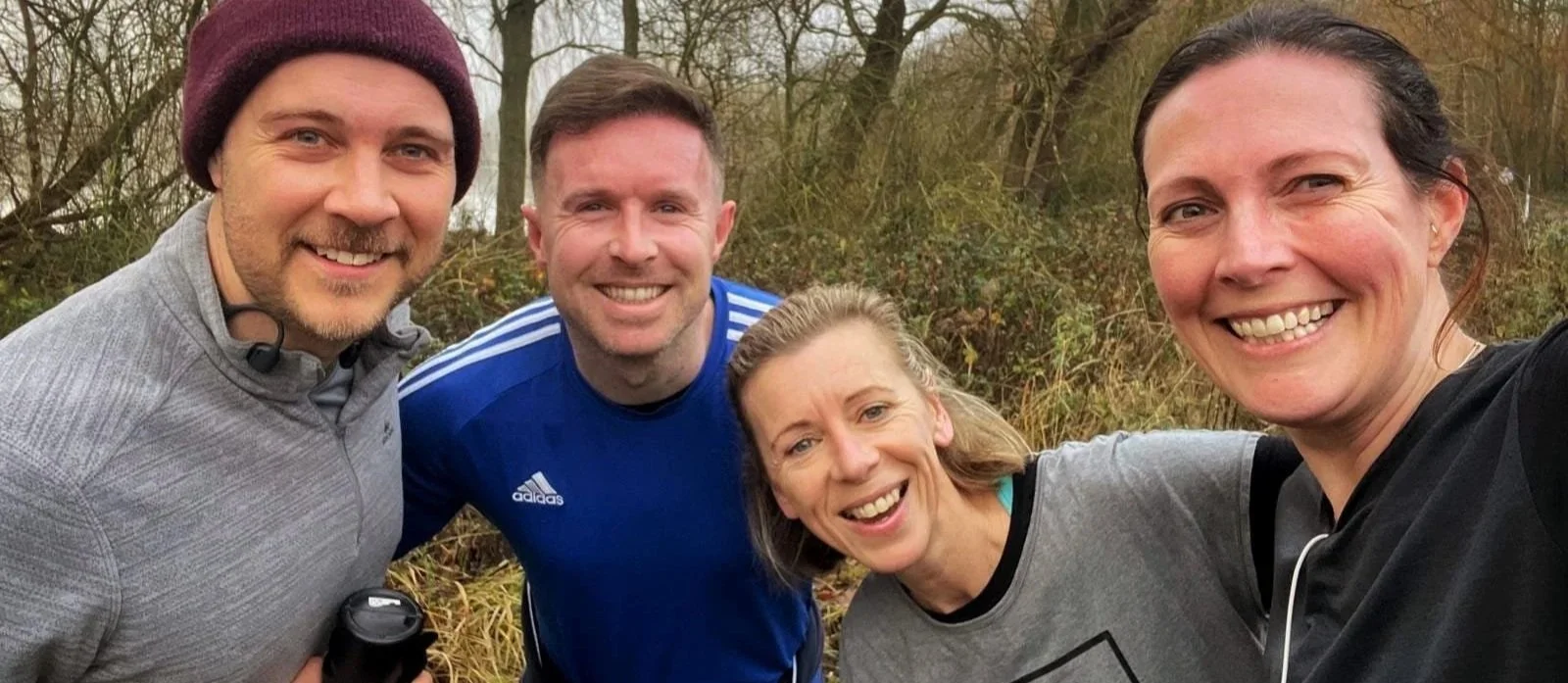
I now regularly see friends and work colleagues at Parkrun (actually, I consider these work colleagues to be friends). We’re not in meetings, not behind screens, not performing professional roles. We’re cold, slightly tired, in running gear, and cheering each other on.
That has changed our relationships. It’s created a sense of shared experience that carries back into our work lives. That’s not just “nice”; that’s social capital. That’s trust, connection, and belonging, all of which we know matter for wellbeing, resilience, and mental health.
I feel closer to my friends, and in a world of increasing loneliness and isolation, that means something. With societal wellbeing on the government agenda, perhaps they could learn from this.
It has changed how I structure my time
My weekends now start with a run. That shapes the whole day. I’m up earlier, I’m more energised, I’m more likely to do something active or social afterwards rather than drifting into passive time.
That matters at a societal level. How people structure their time affects family life, their productivity, and wellbeing… but we almost never talk about interventions in those terms. The government has been trying to influence behaviour for years, and there is a mechanism here for how to do it.
It has changed how I engage with my local area
I’ve explored parts of Colwick I wouldn’t otherwise have visited. I know the paths, the lakes, the seasons there. The energy-sapping slightly gravelled path I hit at around 3k that kills me every time. The joy of hitting Roy’s Split for a second time which means I’m nearly there. It feels more mine now or perhaps, I feel more part of it. I care so much more about those little paths and trees and lakes.
I’ve always struggled to identify what ‘my community’ might be, but I think this is part of it. Feeling connected to place, caring about the local environment, and community pride. It’s not something you measure by counting steps or calories, but it has real social value.
And it has changed how I think about family and the future
I now have a baby and a running buggy. I’m working up to running it with my little boy. That raises new questions for me: is this something we’ll do together? Will Parkrun be part of how he understands weekends, his own relationship with exercise, his community?
If it is, the impact of Parkrun on my life won’t just be personal, it could be intergenerational. That is lasting change, something the government strives for in all areas. A strong evaluation could unlock lessons for how to do this.
Why this matters for evaluation
None of these impacts show up if all you ask is: “Does Parkrun improve physical fitness?”
They are relational, social, temporal, economic, and cultural effects. They’re not complicated, but they are layered.
This is why I believe evaluation matters. Not because we need to “prove” Parkrun works, but because without evaluation, we fail to see the full picture of what it does. We fail to understand HOW and WHY something works, not just WHAT WORKS.
And you don’t need to be an expert to understand this. You don’t need to complicate it to make it meaningful.
A simplified approach to evaluation, can be broad, but is one that asks:
What is changing for people?
How are they behaving differently?
What new relationships, routines, or patterns are emerging?
Who benefits, and in what ways?
If £160,000 is spent to understand these broader impacts properly (and if that understanding is then used to shape policy, funding, and design) that does not strike me as wasteful. It strikes me as responsible.
Because once you see Parkrun not just as a run, but as a social infrastructure that shapes health, community, place, economy, and family life, the question is no longer “why evaluate this?”
If the Government actually uses what is learned (let’s see…), it becomes: “how could we afford not to?”
