
Helping you to avoid staring at a blank page
Theory of Change > Simplified
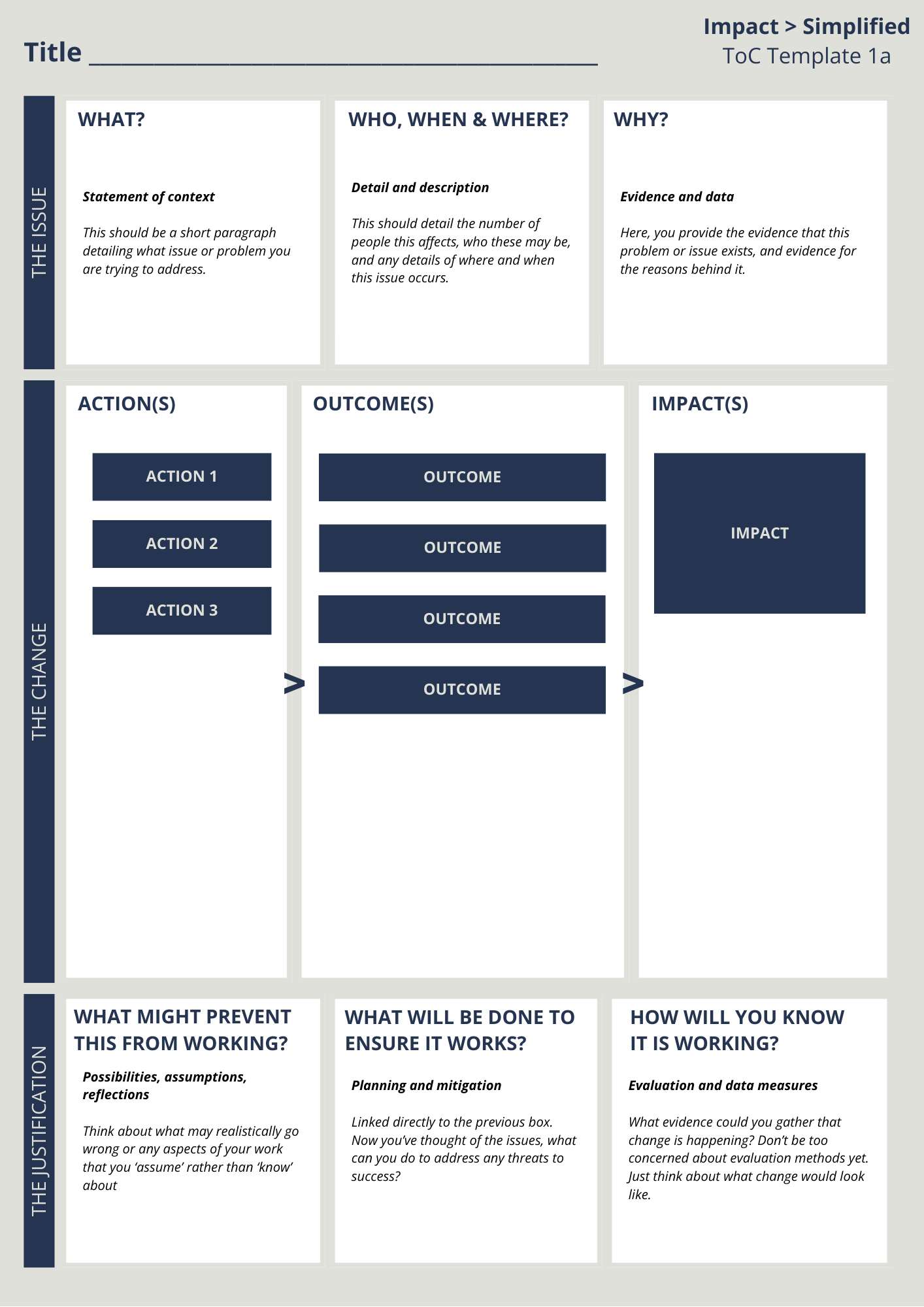
< Start simple
(a logical framework)
Then develop and refine
(a ToC map) >
Explore the steps and
access the templates below
What would Theory of Change look like if it was simplified?
This doesn’t mean doing less. This means breaking it down into steps, using simple and clear language, encourages thinking by asking questions, and makes the structure visible.
These three templates are designed to be used in order. Each one builds on the last, helping teams move from understanding the problem, to clarifying change, to planning evaluation.
They are not about getting the “perfect” answer. They are about creating shared understanding. These should be worked on and developed together.
Theory of Change > Templates and Steps
Things to remember:
Theory of Change should be developed collaboratively. Involve others.
Theory of Change should be evidenced. A narrative document should sit along side this template, detailing every item, what it means, and the evidence for it.
Theory of Change is never finished. This is your way of understanding and communicating your work, but things will change over time!
Template 1: Clarifying the Problem, the Change, and the Rationale
This first template is about getting the foundations right.
It is structured around three simple sections:
1) The Issue (What is the problem?) > This step slows you down and avoids jumping straight to solutions
2) The Change (How do we think change happens?) > This is laid out clearly so you can see the logic
3) The Justification (Why this approach and what could happen?) > This helps you reflect and ensure things will work
How to use this collaboratively
Bring together people who deliver, manage, and support the work, as well as those on the receiving end
Use discussion and debate before writing. really make sure you analyse the problem
Aim for shared agreement, not perfect wording. You will revisit this again.
Once you’ve drafted something, do a little reading around the items. Do others outside your organisation agree?
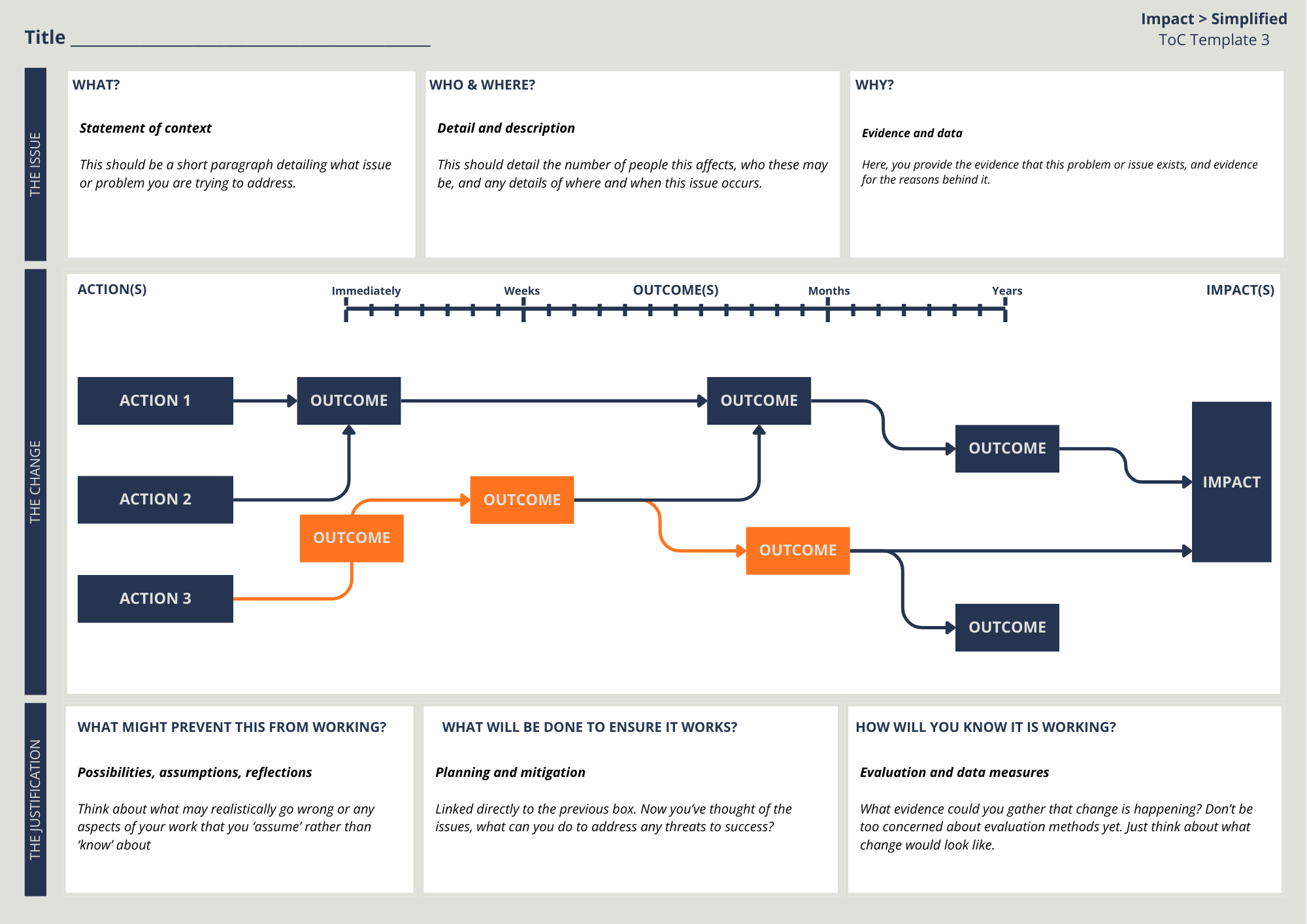
Template 2: Placing Outcomes on a Timeline
Here, teams revisit their outcomes and place them on a timeline. Instead of thinking ‘short’, ‘medium’ or ‘long’, this template specifies weeks, months, and years, to encourage you to really think about realistic timescales.
This helps teams think more realistically about how change unfolds over time, rather than assuming everything happens at once.
Teams are also asked to explain why they think outcomes happen in this order.
How to use this collaboratively
Challenge each other’s assumptions gently.
Ask “what usually comes first?”
Accept that not everything is linear… but clarity still helps
Consider wider literature: Does existing evidence support your timeline and predictions?
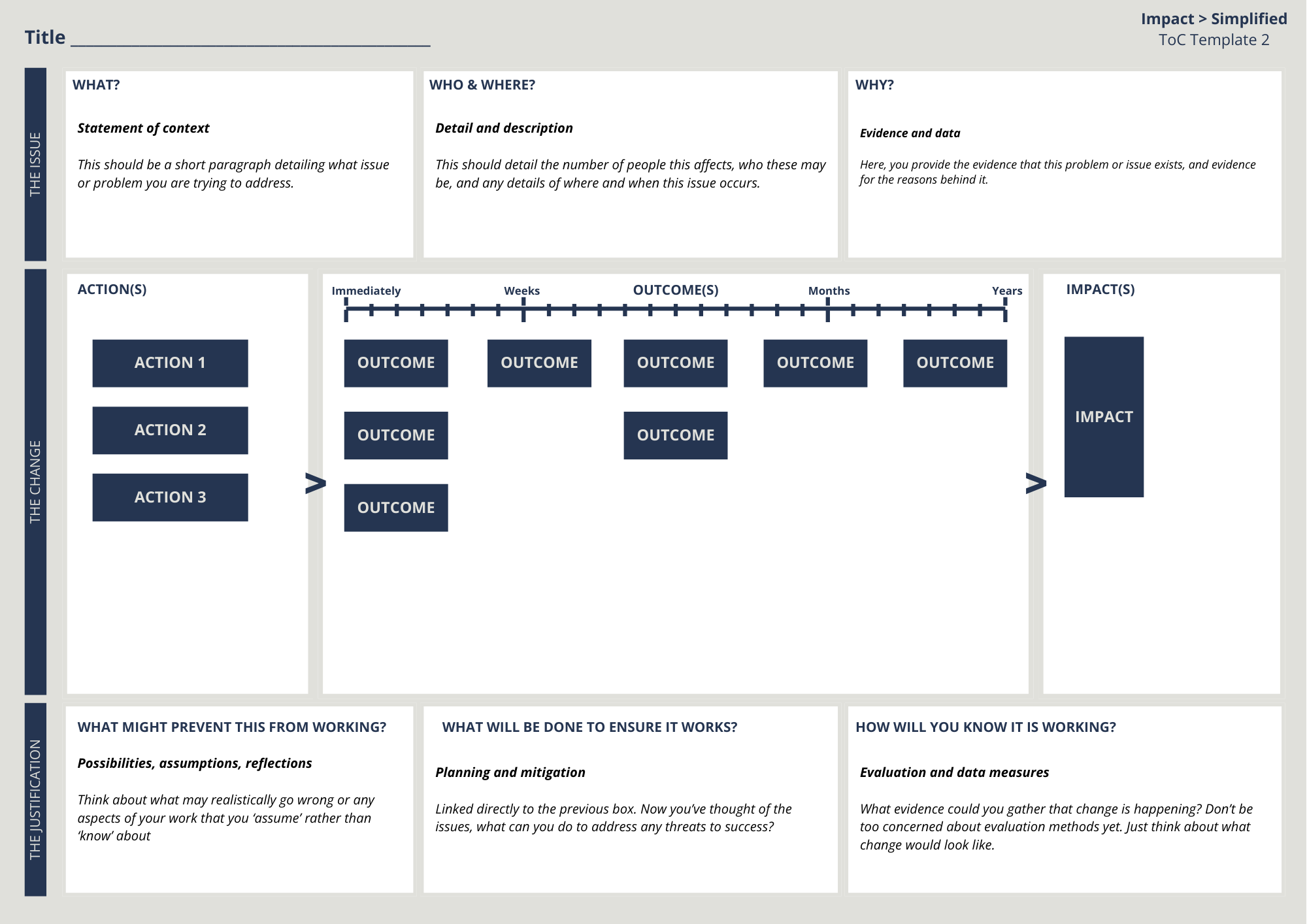
Template 3: Turning Columns into a Map
The final template moves from lists and columns, to a visual map.
Teams turn activities, outcomes, and impact into a flow diagram, using arrows to show what leads to what, which activities link to which outcomes, and where multiple pathways exist.
This creates a clear Theory of Change map that shows thinking and detail in a clear visual.
How to use this collaboratively
At this stage, one or a few staff can lead on turning group thinking into a flow chart. Then reflect with your wider group and agree on the draft.
This means the Theory of Change is no longer abstract, it reflects real thinking.
Remember: One template is a great representation of your Theory of Change. But! You need to detail what each of these items mean, and the evidence behind them, outside the visual map.
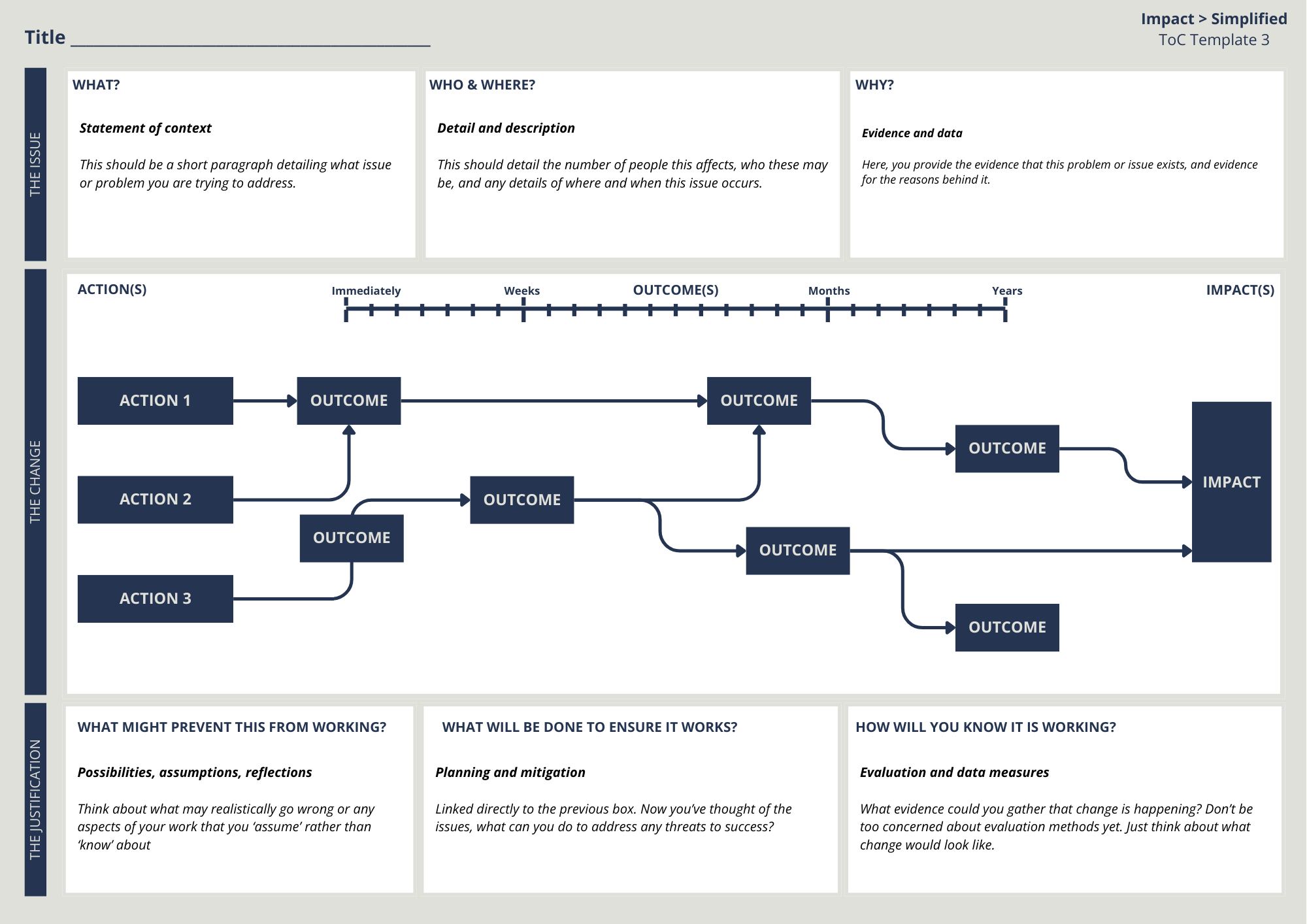
Next steps: From Theory of Change to Evaluation Planning
Because the map shows:
what matters most
where change is expected
what actions lead to which specific outcomes
and where uncertainty sits
it becomes much easier to plan evaluation.
You can now ask:
Which outcomes matter most to understand?
Where are we least certain?
What evidence would actually be useful?
Evaluation becomes a natural next step, not an added burden.
You’ve already started the planning, now we move on to working out how.
Need help in creating your Theory of Change?
I can help you better understand this, through our Explainer sessions
-or-
Help you start creating one of your own, through our Development workshops
Simply contact to find out more
<
There isn’t just one way to do Theory of Change.
Check out some of these templates used elsewhere. These may work better for you.
Click on the image below to open a link.
ToC Templates from across the sector
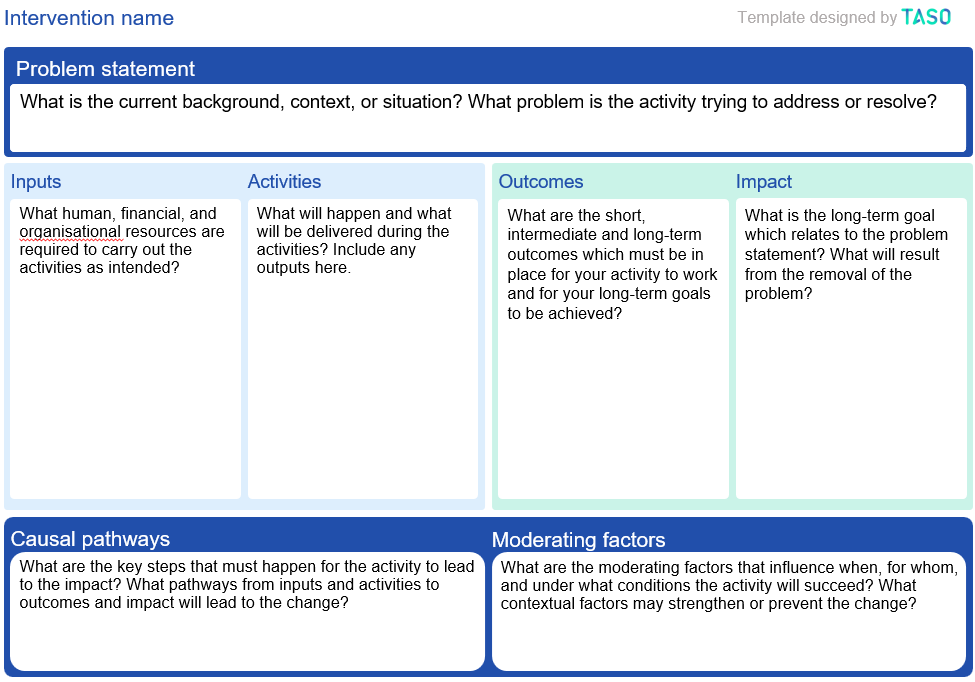
TASO’s CToC Template:
favoured by HE institutions
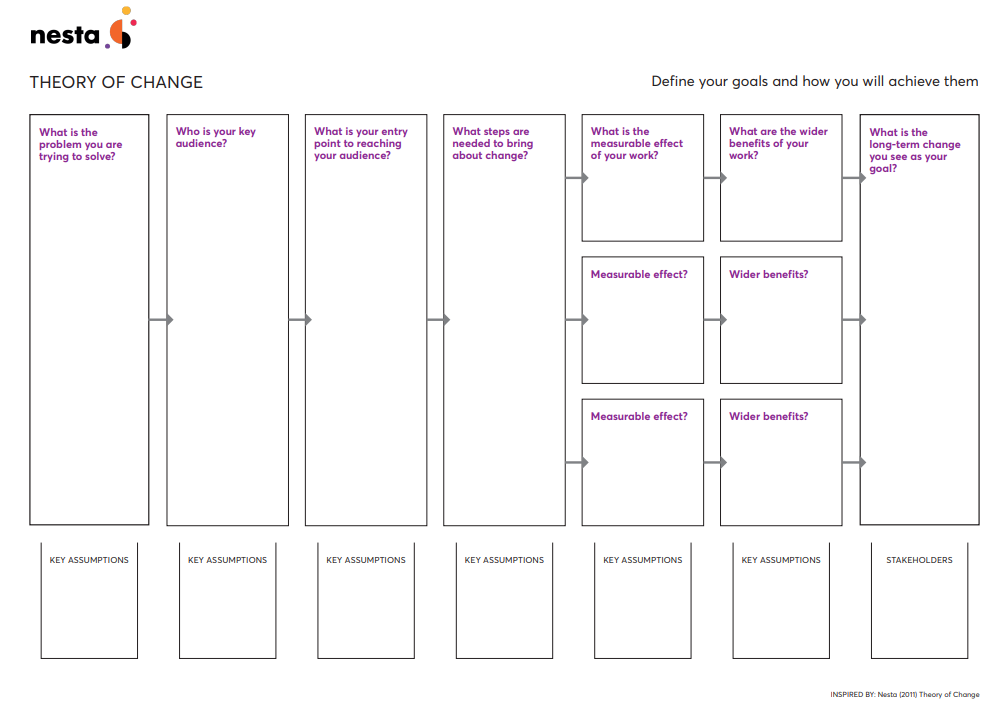
Nesta’s ToC Template:
used by wider ‘what works’ centres
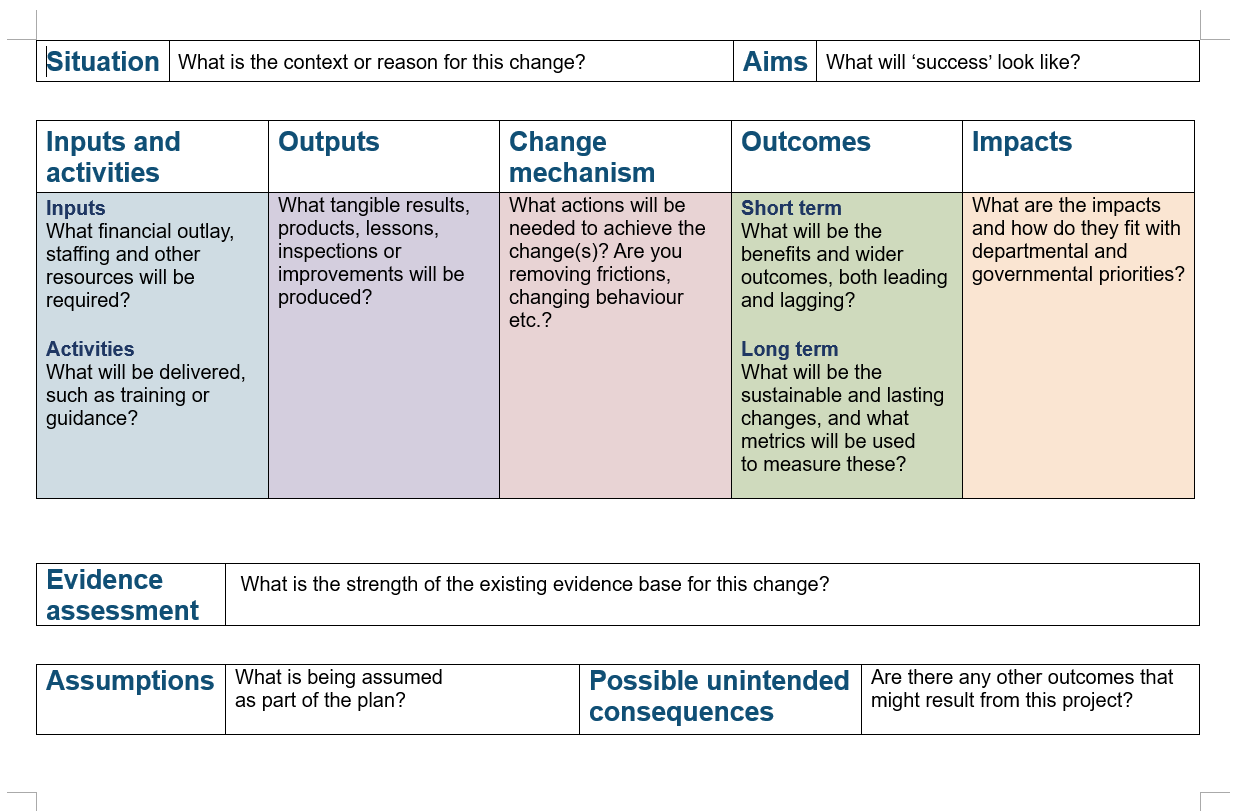
UK Gov’s ToC Template:
used by government bodies